Wellness and healthcare are an essential part of our daily lives, but creating awareness of it really complicates the whole thing, with unnecessary restrictions, bans, and limited opportunities, it becomes difficult to reach your audience.
To make sure that your healthcare and wellness brand reaches its audience and connects with them, you will require a channel to connect through, and digital marketing does exactly that.
However, with around 90% of users turning to search engines for healthcare information, the success of your brand entirely depends on where you appear on Google.
Apart from writing educational and well-intent articles and posting the audience centered content, SEO for health and wellness business plays the main role in making sure that your content appears on top.
A well-planned SEO strategy ensures the services reach the right audience, build credibility, and pique the clients’ curiosity.
At Taboo Digital Marketing, we understand the meaning of wellness marketing, healthcare search engine optimization and how it is more than merely traffic; it is about creating a safe space, creating connection, and trust in a sensitive, highly competitive space.
Here is the guideline on how SEO can position the health and wellness brand for long-term growth.
1. Build a Smart Keyword Strategy
Every SEO for healthcare begins with an understanding of the audience, like how people search. For example, you need to see your brand from your audience’s eyes to understand their perception, needs, and expectations.
Online bahis kullanıcılarının son yıllarda en çok zorlandığı konuların başında, güncel adreslere ulaşma meselesi geliyor. Daha önce sorunsuz şekilde erişilen sitelerin zamanla açılmaması, kullanıcıları alternatif bilgi kaynakları aramaya itiyor. Bu noktada rehber sitelerin önemi giderek artıyor.
Özellikle İkimisli gibi popüler platformlarda adres değişimleri, kullanıcıların dikkatli olmasını gerektiriyor. Yanlış veya eski linkler üzerinden giriş yapmaya çalışmak, hem zaman kaybına hem de güvenlik risklerine yol açabiliyor. Bu yüzden kullanıcılar, doğrudan yönlendirme yerine detaylı açıklamalar sunan İkimisli giriş rehberlerini tercih ediyor.
From “holistic therapy near me” to “wellness programs for anxiety,” these are the types of searches that most audiences make, and by leveraging tools like Google Keywords Planner or Ahrefs, you can identify terms that balance high relevance with low competition.
Once you get the perfectly-aligned keywords, now it is time to integrate them seamlessly into the blogs and around the website. Try not to overload your site with keywords, because that will take away the human touch.
You can integrate these keywords in titles, headings, and blog content, to not only improve visibility while compromising readability.
The alignment between the user intent and content quality helps Google to see your site as valuable and trustworthy.
2. Optimize Metadata and On-Page Elements

Search engines usually rely on metadata to interpret the website’s purpose, while some users just rely on it to decide whether to click.
Optimize the title tags with clear and keyword-rich phrasing that is under 160 characters in length, and then write a meta description that summarizes each page in under 160 characters.
Afterwards, write meta descriptions that summarize each page in under 160 characters. By organizing the content with the right headers, you can easily improve structure and scannability.
These little details signal professionalism and relevance, which help the brand stand out in search results and attract better, more qualified visitors.
3. Create Valuable, Original Content
Well, in the wellness industry, content builds both authority and visibility. People are seeking guidance, authenticity, and education, basically, what your content can deliver.
Publish:
- Educational blog posts
- Case studies
- Client success stories
- Expert interviews
- Infographics and videos
Each piece should inform and inspire, not just sell. Whether you’re explaining the benefits of holistic therapy or sharing patient stories, meaningful content humanizes your brand and positions it as a credible voice in the health space.
4. Strengthen Technical SEO and Site Experience
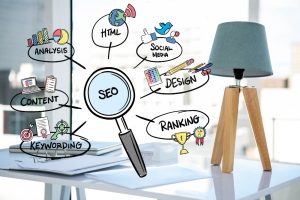
An effective site is nothing if it is hard to navigate and slow to load. Technical SEO for healthcare industry makes sure your site is really fast, secure, and user-friendly, and this is all influenced by how Google ranks you.
Try to prioritize speed by compressing images and optimizing code. Make sure that the website works responsively on mobile, as over 60% of organic traffic now comes from smartphones. Your design must be intuitive, with clear calls to action and seamless navigation.
Apart from this, security is also very essential; try to switch to HTTPS for encrypted, trustworthy connections. Add an XML sitemap so the search engines can easily index your content.
By merging these steps together, you can improve user experience and also signal authority to Google’s algorithm.
5. Dominate Local SEO
Location matters for every brand, but for wellness and healthcare brands, it holds significant importance.
Having the correct and same information across all the channels makes it easier for Google to find you and tell the audience that you are what they are looking for.
That’s why it is better to claim and optimize the Google Business Profile, ensuring the name, address, and phone number (NAP) are consistent across all listings.
Add updated photos, respond to reviews, and use local keywords within both the content and metadata.
It’s better to post positive client reviews, as active engagement boosts both local rankings and trust, two essentials in a field where credibility drives conversions.
6. Build Authority Through Backlinks

Backlinks are the core of SEO. What does it do? It is a way to link or connect your site with a credible website, which acts as a digital endorsement. The more trustworthy the site that has been referenced is, the more authority your content will have.
You can earn the backlink through collaborations, by posting guest articles, or by performing expert commentaries.
You can connect and collaborate with local media or a reputable blog site that aligns well with the brand’s values.
Every high-quality backlink not only strengthens the domain authority but also drives referral traffic and amplifies online visibility.
7. Use Social Media to Promote SEO
Scholarly, the impact of social media on search engine ranking is not direct, but rather more inclined towards increased content discoverability and brand engagement.
Through a well-planned use of platforms like Instagram, LinkedIn, and YouTube, a company can spread its knowledge of the field, make its corporate image more personal, and refer future users to its main site.
Regular posting, genuine interaction, and shared content that is curated serve as implicit relevance cues to the search engines, thus increasing the organic authority of a site, albeit in a subtle manner.
In the wellness industry, where relationship and community membership are the most important aspects, this visibility can successfully make interaction a long-term client relationship.
8. Stay Data-Driven and Adapt

SEO is a business that exists in an ever-changing online ecosystem; a competitive advantage requires a high level of performance analysis, which should be conducted on an ongoing basis, using such tools as Google Analytics and Search Console.
Following the trends of the keywords, the interactions of the users, and their conversion rates, the practitioners will be able to identify which strategies will pay off and which aspects need to be adjusted.
It is important to keep up with changes in algorithms and trends within the industry to ensure that strategies are up to date. Adaptive flexibility and insight are the best assets of a practitioner in the wellness marketplace, where the competition is very high.
9. Harness the Power of AI
Artificial intelligence is also changing the practice of SEO by simplifying the process of finding keywords, automating on-page optimization, and predicting new trends.
AI-based applications can bring out new search terms, refine metadata, and improve textual accuracy, and at the same time allow hyper-personalised user experiences that extend their stay.
In the hands of human ingenuity, AI transforms SEO into not only a technical task but an active growth driver, constantly improving the results and protecting the strategic relevance in the foreseeable future.
Conclusion: Visibility Which Builds Trust

The health and wellness brands need not just be ascending in the ranking of the search results; they need to be present at the right place at the right time when the need arises.
It is on such visibility that trust is established and the trust is further translated into long term loyalty.
At Taboo Digital Marketing, we do not underestimate the subtlety of marketing wellness brands not only in terms of wise discretion and adherence to regulations but also in terms of compassionate and sincere communication.
Our healthcare SEO strategy process combines imaginative expression and scientific discipline, thus helping companies to earn free traffic and at the same time keep to their internal mission.
Together, we will make you more digital, help you build your own community, and make your wellness brand stay afloat and even flourish in the online market.